
Create
Add the employee record, profile details, branch, department, designation and reporting context.
Operentra HRM connects employee records, profiles, contracts, documents, assets, onboarding, offboarding and claims so HR teams can manage every person from first setup to final clearance.
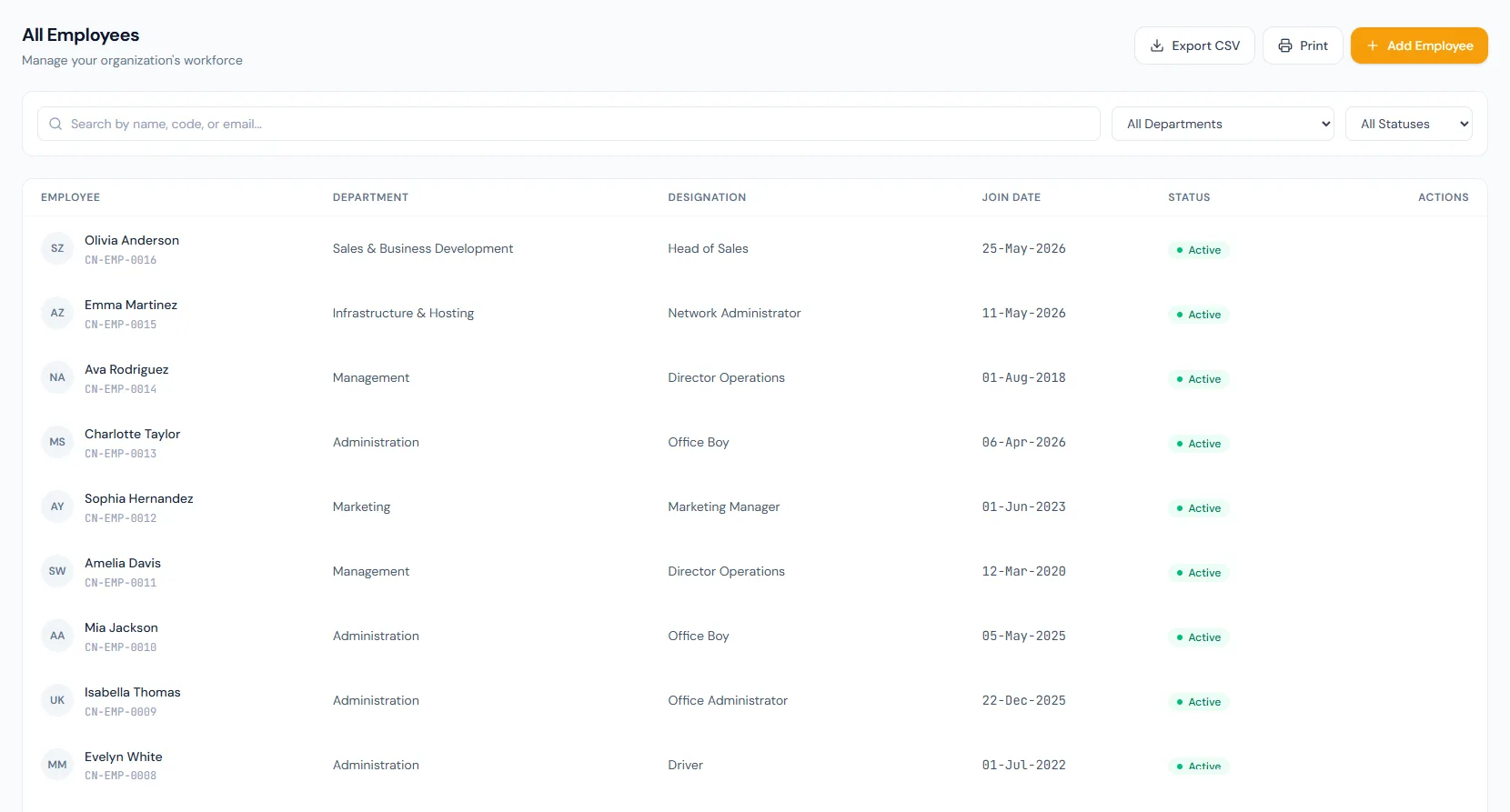
Lifecycle turns HR events into a governed path: employee creation, preparation, contracts, document review, asset custody, claims, movement history and separation.
The Lifecycle module connects the employee record to the operational events around it: joining tasks, documents, contracts, assets, claims, changes and exit settlement.
Add the employee record, profile details, branch, department, designation and reporting context.
Use onboarding tasks for communication, account setup, biometric readiness and asset preparation.
Maintain contracts, documents, work history, assigned assets and approved expense claims.
Preserve promotions, transfers, renewals and employee movement without overwriting history.
Complete clearance, settlement, asset return and exit documents while retaining the record.
Manage workforce records, departments, designations, join dates and employee status.
Open featureStore personal, contact, job, reporting and employment details in one employee profile.
Open featureTrack employment contracts with start dates, terms, renewals and acceptance history.
Open featurePreserve transfers, promotions, reporting changes and employment movement history.
Open featureManage employee files with types, metadata, verification status and expiry tracking.
Open featureIssue, return and audit company-owned assets across the complete employee journey.
Open featureNew-hire checklists are created automatically for pre-joining, day-one setup and probation readiness.
Open featureRun clearance, settlement, handover checks and exit documentation from one workflow.
Open featureApprove reimbursements with manager and HR review, then route approved claims into payroll.
Open featureComprehensive employee profiles, contract renewals, document expiry tracking, asset issuance history, onboarding tasks, offboarding settlement and expense approval — every stage of employment covered in one module.
Each workflow keeps context attached to the employee record so HR can review who held an asset, which document expired, which contract was accepted and how an exit was cleared.
Onboarding, offboarding and document reviews move through clear checkpoints so HR teams can assign work, verify completion and keep every employee step accountable.
Contracts, expense claims, employment status, work history and final clearance details stay connected, giving payroll and finance teams cleaner inputs before processing.
Map your employee journey to the right HRM setup, permissions, payroll links and rollout plan.
Employee records, onboarding tasks, documents and assets live in one place, so new joiners move from preparation to active employee status without scattered follow-ups.
Contracts, expense claims and offboarding checks stay connected to the same employee record, giving finance clearer context before final settlement.
Employee profiles, work history and document tracking preserve every movement without overwriting current data, keeping reporting clean and audits fast.
Asset assignments and returns are tracked in the system, so HR can see who received equipment, what came back and what still needs clearance.
Onboarding and offboarding run as controlled workflows instead of disconnected tasks, so teams can prepare, approve and close employee journeys with confidence.
Lifecycle covers employee management, profiles, work history, contracts, documents, assets, onboarding, offboarding and expense claims.
Contracts, claims, final settlements, employee status and compensation context can feed payroll and reporting workflows.
Yes. The employee record remains the center while onboarding prepares the joining process and offboarding closes separation safely.
The profile shows the current state; work history preserves the timeline behind transfers, promotions and assignment changes.
Yes. Asset assignments and document records remain connected to the employee for review, portal visibility and audit history.