
Run exit clearance by composing assets, loans, leave encashment, PF ledger entries, payroll adjustments and HR letters into one controlled process.
Every view stays structured and reviewable — nothing hides behind a tab.
Encashment sums eligible unused days by policy rate.
Eligibility and formula follow the company's country rules, with an HR override when policy requires it.
Withdrawal adds cash; transfer or forfeiture records the ledger without cash payout.
Active or paused loan balances reduce the final settlement.
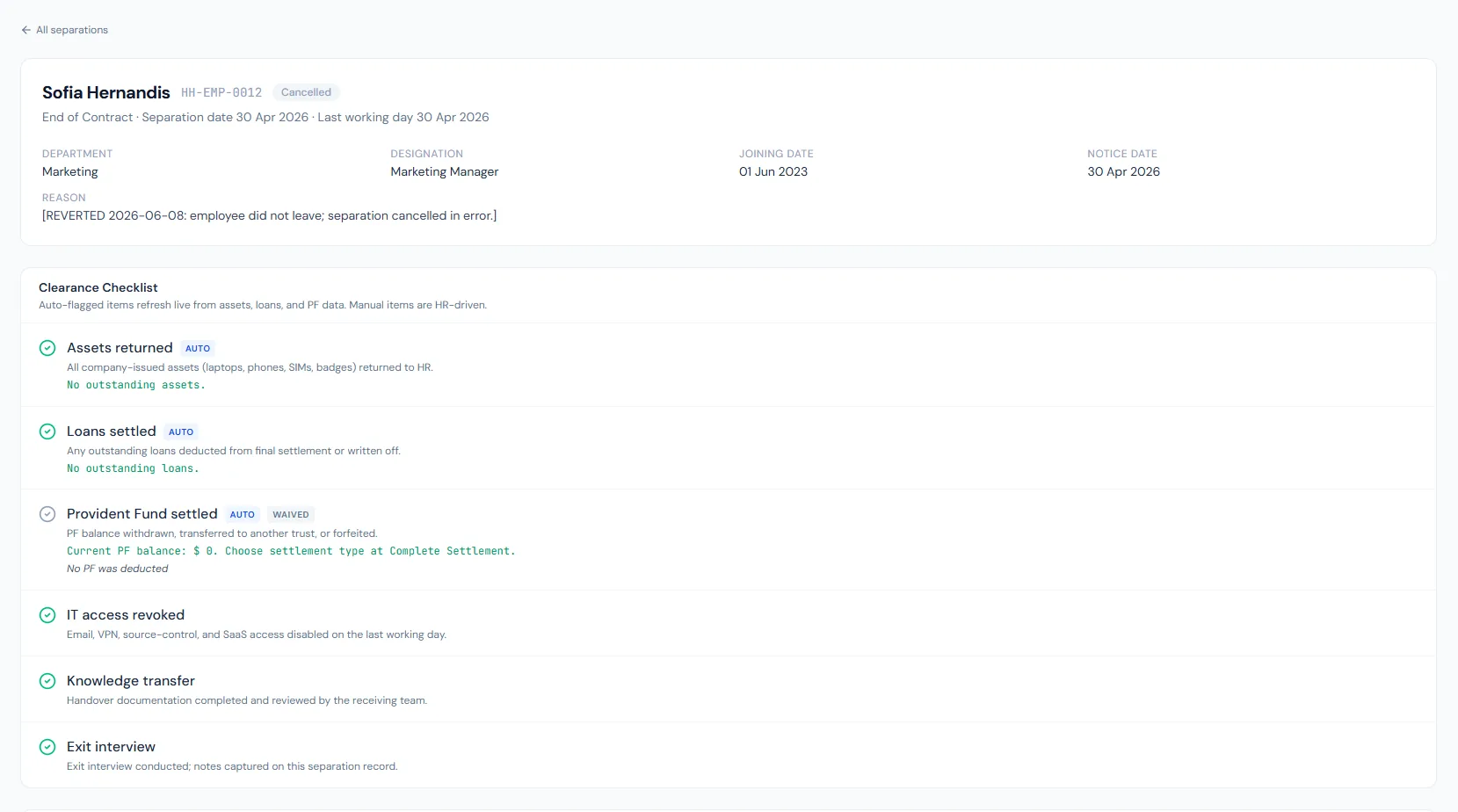
The Offboarding page from HRM coordinates separation clearance, final settlement inputs, asset return readiness and exit documentation in one controlled workflow.
Withdrawal, transfer and forfeiture paths are recorded distinctly.
If deductions exceed payout, payroll receives a deduction adjustment.
Settlement cannot complete until every clearance item is completed or waived.
Six ready-made clearance items include three flagged live from assets, loans and provident fund data — those cannot be ticked by hand.
Clearance can include company-owned item return requirements.
Experience certificates are issued from the document workflow.
Run exit clearance by composing assets, loans, leave encashment, PF ledger entries, payroll adjustments and HR letters into one controlled process.
Track return and approval items before the employee is formally separated.
Calculate leave encashment, gratuity, PF cash and outstanding loans before payroll adjustment.
Issue the experience certificate and email the employee the breakdown and signed PDF.
The completion step writes settlement records, updates employee status, issues HR documentation and sends the final communication.
The system creates a payroll deduction adjustment so the shortfall is handled in the final run.
No. The employee status is changed to separated while history remains available.
Yes. HR can override gratuity at completion when policy requires it.
Map your current workflow to the right HRM setup, permissions and rollout plan.