
Configurable leave types
HR can define the leave taxonomy.
Control leave types, accrual behavior, eligibility, approval rules, encashment behavior and balance handling for annual, casual, medical and other leave categories.
Policies define annual, casual, medical or custom leave types.
Choose a view to see how this module keeps daily HR work structured and reviewable.
Policies define annual, casual, medical or custom leave types.
Values remain traceable in HRM.The Leave Policies page from HRM centralizes leave types, entitlement behavior, approval rules and encashment settings so balances and requests follow clear policy.
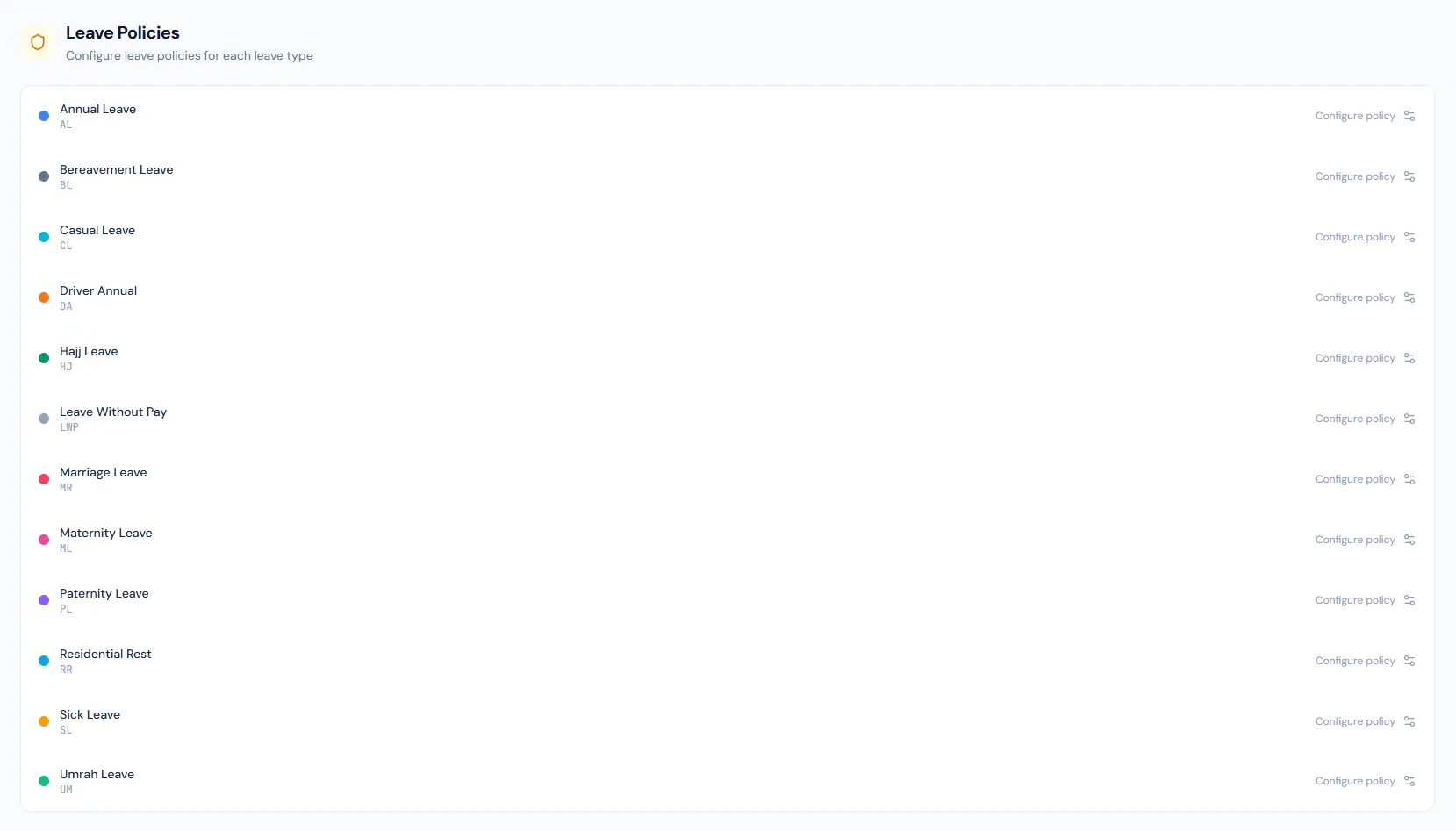
Control leave types, accrual behavior, eligibility, approval rules, encashment behavior and balance handling for annual, casual, medical and other leave categories.
Define the leave categories employees can request.
Set how leave is allocated, accrued or limited.
Policy settings guide review, balance updates and encashment.
HR can define the leave taxonomy.
Policy controls allocation and usage, including a cap on how negative a balance may go.
Policies can count rest days flanked by leave, with the adjacent-day scope configurable.
Annual up-front, monthly pro-rata and cyclic accrual — topped up daily to a cap — are all supported.
Unused leave can connect to final settlement when allowed.
Rules stay centralized instead of hidden in spreadsheets.
Control leave types, accrual behavior, eligibility, approval rules, encashment behavior and balance handling for annual, casual, medical and other leave categories.
Shared context keeps this workflow aligned with leave management records.
ConnectedShared context keeps this workflow aligned with leave balances records.
ConnectedShared context keeps this workflow aligned with offboarding records.
ConnectedShared context keeps this workflow aligned with payroll records.
ConnectedShared context keeps this workflow aligned with attendance records.
ConnectedTypes, entitlement, eligibility, accrual, limits and encashment rules — approval itself is permission-gated, not policy-routed.
Yes, when the policy allows it.
They provide the rules used to allocate and update balances.
Map your current workflow to the right HRM setup, permissions and rollout plan.