
Review active loans, repayment schedules, outstanding balances and defaulters so HR and finance can monitor exposure, payroll deductions and employee loan history.
01Select loan reportLoan Reports process stepActive
02Apply period/status filtersLoan Reports process stepActive
03Review balancesLoan Reports process stepActive
Every view stays structured and reviewable — nothing hides behind a tab.
Active loan reports identify employees with outstanding loan exposure.
Repayment schedule reports show payroll-linked deductions over time.
The defaulters report lists missed installments as of a selected month and year.
Loan repayment reports connect to payroll deductions and final settlement review.
The Loan Reports page from HRM helps teams review active loan exposure, repayment schedules, disbursement history and payroll-linked deductions from one reporting view.
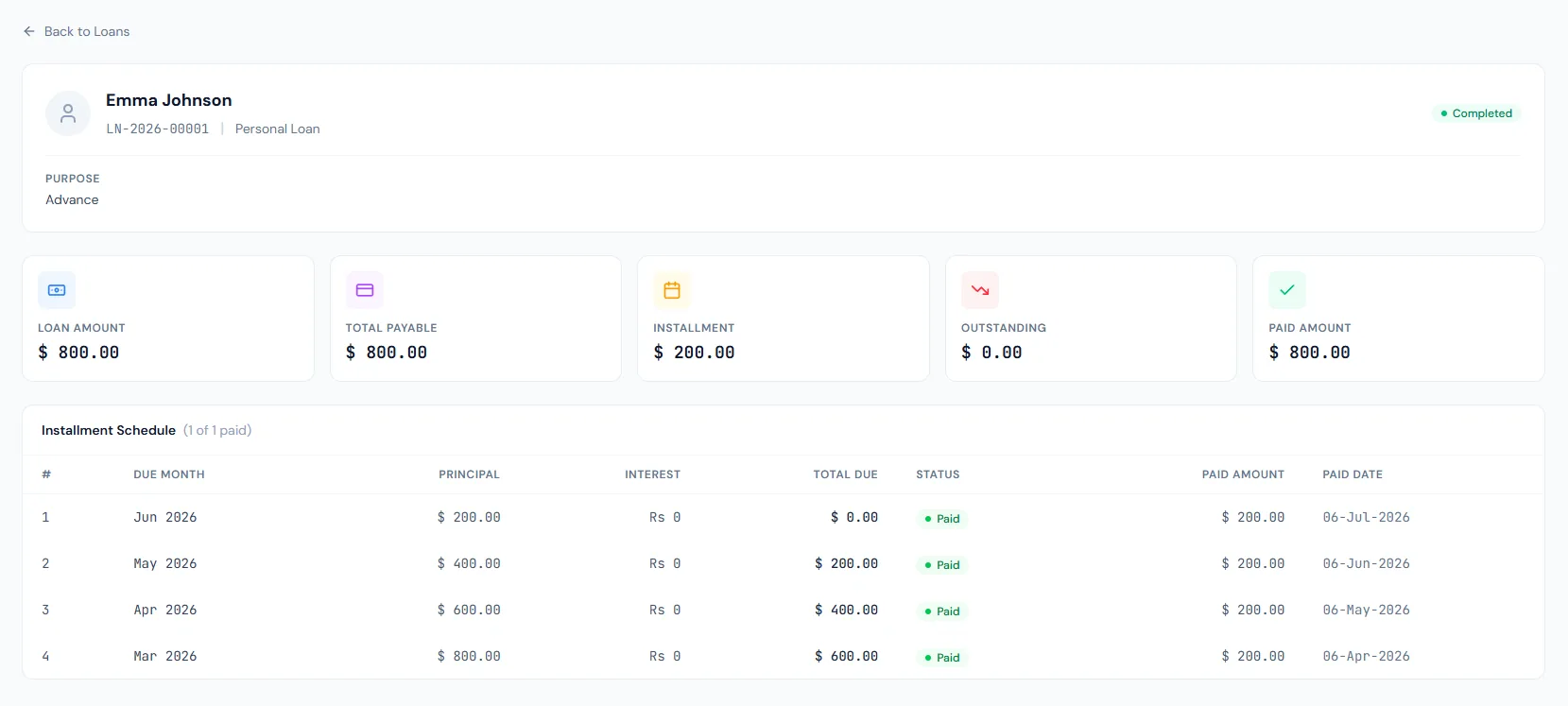
Review active loans, repayment schedules, outstanding balances and defaulters so HR and finance can monitor exposure, payroll deductions and employee loan history.
List loans that still affect employee balances and payroll deductions.
Show installment timing, paid amounts and remaining balances.
Surface employees with missed installments as of a chosen month and year.
Monitor open employee loans.
Review planned and completed installments.
See remaining exposure per employee.
Catch missed installments before they compound.
Outstanding balances can support offboarding settlement review.
Share loan reports with finance as CSV.
Review active loans, repayment schedules, outstanding balances and defaulters so HR and finance can monitor exposure, payroll deductions and employee loan history.
Active Loans, Repayment Schedule, Outstanding Balances and Defaulters.
Yes. Loan installments can be deducted through payroll.
Yes. Outstanding balances matter during final settlement.
Map your current workflow to the right HRM setup, permissions and rollout plan.